Featured

Postmodernism:An Introduction

“In contemporary society and culture-postindustrial society, postmodern culture-…the grand narrative has lost its credibility, regardless of what mode of unification it uses, regardless of whether it is a speculative narrative or a narrative of emancipation.”

Jean-François Lyotard

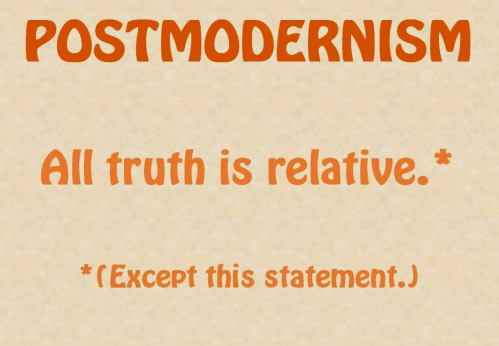
Postmodernism came into being around the late 1960’s as people were tired of the inadequacies of modernism. They began to focus on building your own narrative and not focusing on one simple truth. It focuses on the fact that truths are indefinable as they are guided by experience and everyones experiences are different. When utilizing the postmodern approach in analysis of a text it enables the reader leeway in their interpretation and typically reveals something about the narrative in order to translate a larger, sometimes paradoxical, idea to the audience.

Postmodernism (and postmodern literature) essentially consist of these characteristics:

-intertextuality- interrelationship between texts- one text’s meaning may depend on another text

-metafiction-the author alludes to their own work- sometimes for comedic effect

-self- reference- can be a form of metafiction

-inversion of narrative-in some way inverts a narrative/ plot trope

-Pastiche- referencing some other works style- imitates another works style

-Maximalism-opposite of minimalism- everything in excess

-Irony- contrasts with what one expects of something

-Hyperreality-cannot distinguish between reality and a simulation of reality- i.e. The Matrix

-Paranoia-suspicious of the truth- cannot determine what is the truth

-Fragmentation- a combination of many different elements

-Post-World War 2- During World War 2 modernism was in full swing and people soon realized they didn’t agree with this ideology and so postmodernism came to be.
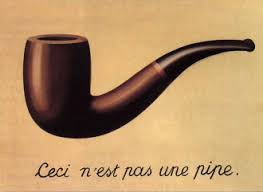
This can be seen as an example of postmodernism as it is paradoxical. It depicts a Pipe and says under it “this is not a pipe”, which is true as it is really a picture of a pipe not an actual pipe- it may even really be a picture of a pipe on a screen as you are reading this on a computer or phone. It is this concept of there being many acceptable truths that is imperative in postmodernism.
Other Culturally Significant Theories:Marxism, Archetypal, and Psychoanalytic

Marxist Critical Theory

Typically attributed to Karl Marx, the marxist critical theory focuses primarily on economic structure, social class divide, and the exploitation of lower class laborers by the upper class. It was this theories idea that a classless system and distribution of wealth to be ideal.This is especially prominent in todays economy with much of the wealth distribution accumulating in the upperclass. It demonstrates Marxism in this wide division between the upperclass and the lower-class.

Archetypal Critical Theory

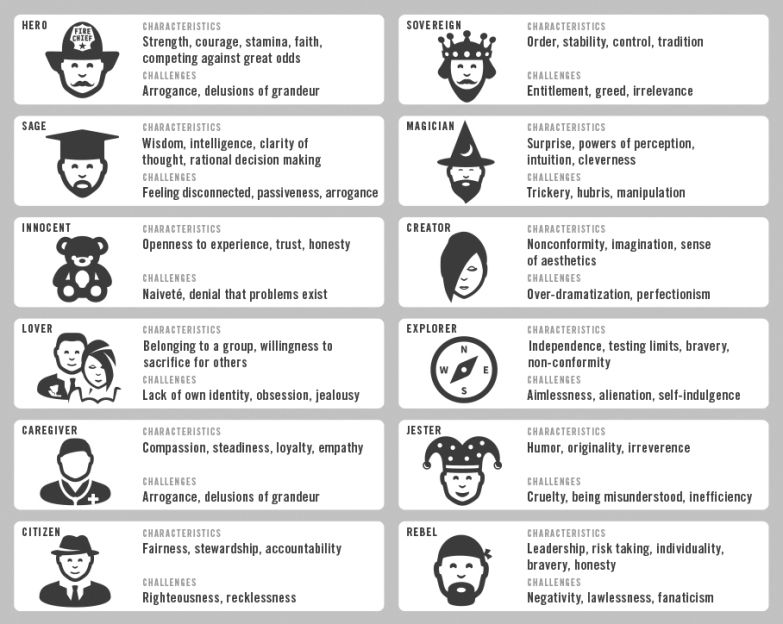
This theory can be attributed to the theorist Carl Jung, when referencing universal archetypes. In ancient times myth/archetypes were necessary in order to make sense of the world around them(i.e. unexplainable events could be explained away with a myth). From Greek myth to ancient Egyptian myth, Myth theory is still relevant in today’s storytelling as it mimics that of myths from the past. It is especially relevant today when considering the mono-myth, or Hero’s journey, as many authors and creatives draw from this format in order to plot their own texts.

Psychoanalytic Critical Theory

Psychoanalytic Critical Theory

Initially introduced by Sigmund Freud, the psychoanalytic theory focuses solely on the subconscious effecting conscious actions (i.e. Childhood events effecting future circumstances). This theory can also be seen and applied in modern psychology within the neo-freudian perspective. It is through this theory that we are able to even help diagnose and overcome certain past traumas which is extremely helpful in our society today (especially with the rapid increase in mental illness due to social media).

Postmodernism: The Epic Conclusion

Throughout this series of blogposts, I have tried to examine the meanings of multiple different texts through the postmodernist framework. However, I must remind you that postmodernism is essentially the elusiveness of one profound truth or meaning portrayed in a text. This is why I must conclude that all of the texts I have mentioned can and should be seen in a multitude of lights and should be interpreted in any way- or simply not at all as the meaning can be interpreted as these pieces not having a specific meaning. With this I will leave you with a quick preview of what is theorized to come post postmodernism.

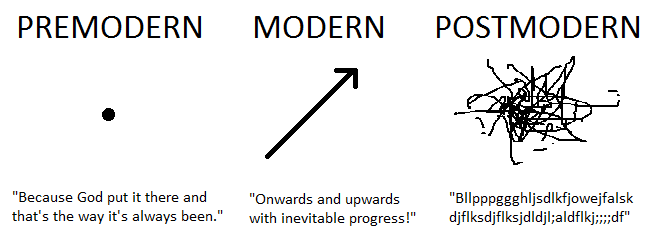
Modernism vs. Postmodernism

-Modernism attempts to reveal profound truths while postmodernism rejects the concept of one singular truth

-modernism= depth-deep meaning

-postmodernism= surface level-avoids suggesting underlying meanings

Potential Problems with Postmodernism:

  • The use of stylistic masks can create texts without true meaning- the meaning becomes about what it mimics
  • over saturation of content- may feel like there is nothing new to create or worth creating
  • It focuses on dystopia issues without coming up with solutions to the problems mentioned

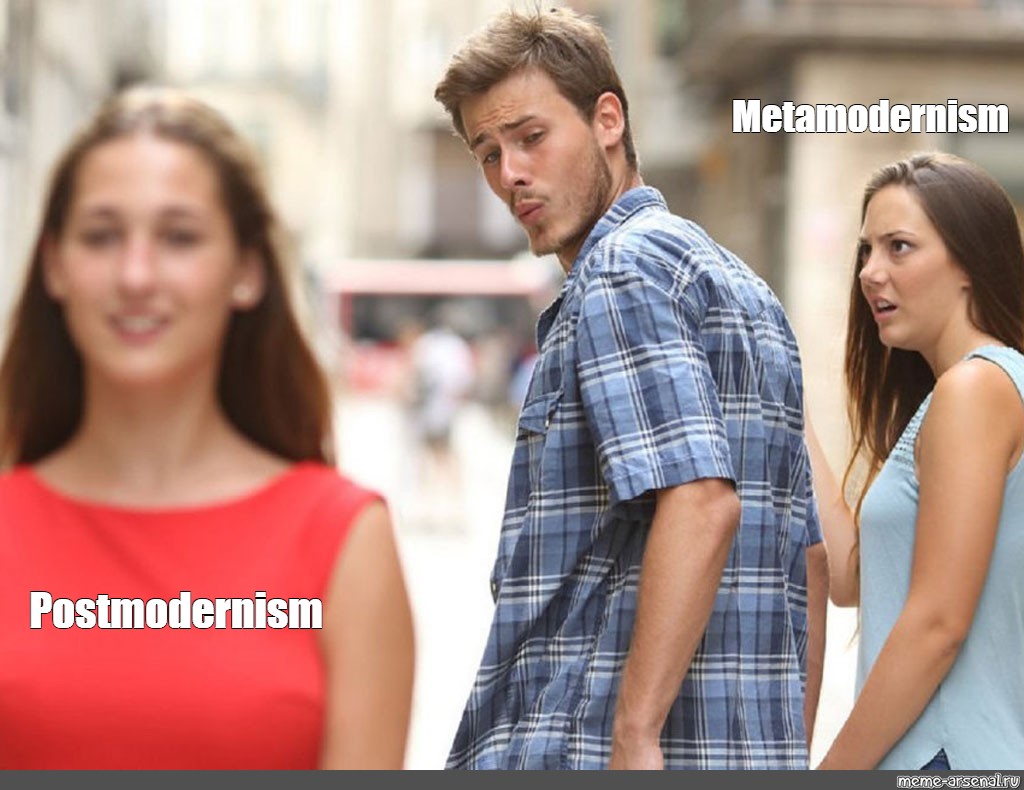
Today: The postmodernist perspective is giving way to meta-modernism, or post-postmodernism. It essentially takes postmodernism as fact and believes interaction with complex text necessary to participating in our modern globally connected culture.

Bibliography

Aylesworth, Gary. “Postmodernism.” Stanford Encyclopedia of Philosophy, Stanford University, 5 Feb. 2015, plato.stanford.edu/entries/postmodernism/?PHPSESSID=2a8fcfb78e6ab6d9d14fe34fed52f103.

Dylan, Bob. “It’s Alright, Ma (I’m Only Bleeding).“Bringing It All Back Home, 1965, http://www.bobdylan.com/songs/its-alright-ma-im-only-bleeding/.

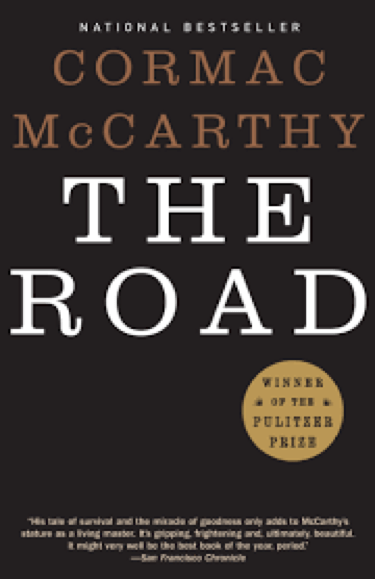
McCarthy, Cormac. The Road. First Vintage International Edition, Random House. 2006. 

The 1975. “Sincerity is Scary.” A Brief Inquiry into Online Relationships, Warren Fu, 2018, https://www.youtube.com/watch?v=1K93ioXL63c.

Yang, Jingyuan. “Post-Modern Architecture.” Postmodernisms Theories and Analyses of Architecture II, Cornell University, 14 Mar. 2015, blogs.cornell.edu/arch5302sp15/2015/03/14/post-modern-architecture/.

Zheng, Kathleen. “Art, Identity, and Culture.” Art Identity and Culture RSS, reinterpellations.web.unc.edu/about/banksy-armored-dove/.

Postmodernism: It’s alright, Ma (I’m only bleeding)

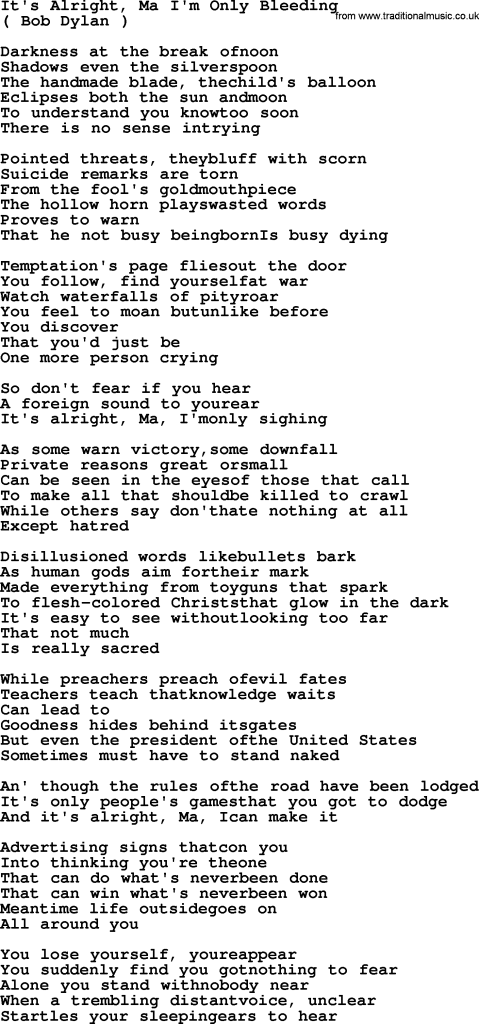
It is through this song that we are able to see the beginnings of the postmodernist movement. We see the backlash from all of the ideals of modernism and how tired people became of people just believing in a better future without really taking action. It is this that established the postmodern ideal. Throughout the song Bob Dylan sings of hypocrisy, manipulations of the media and politicians in order to gain power over others. He is singing of all the travesty that modernism has brought them. He mentions people still dying and crying- it seems like it isn’t getting better and his confidence about the situation is shaken.

It is through the postmodern ideals emphasized through this song that makes it so postmodern. It’s denouncement of modernism as being effective leads one flawlessly into postmodern ideals. It is also through the multiple truths expressed In this song about the harsh reality of their present that makes it so postmodern- it seems have a tone of wanting to choose your own narrative, make your own path. It is also his meaning of hypocrisy in authority (of a sort) that emphasizes his focus on sociocultural issues- an important piece in postmodernism.

Postmodernism: The Road

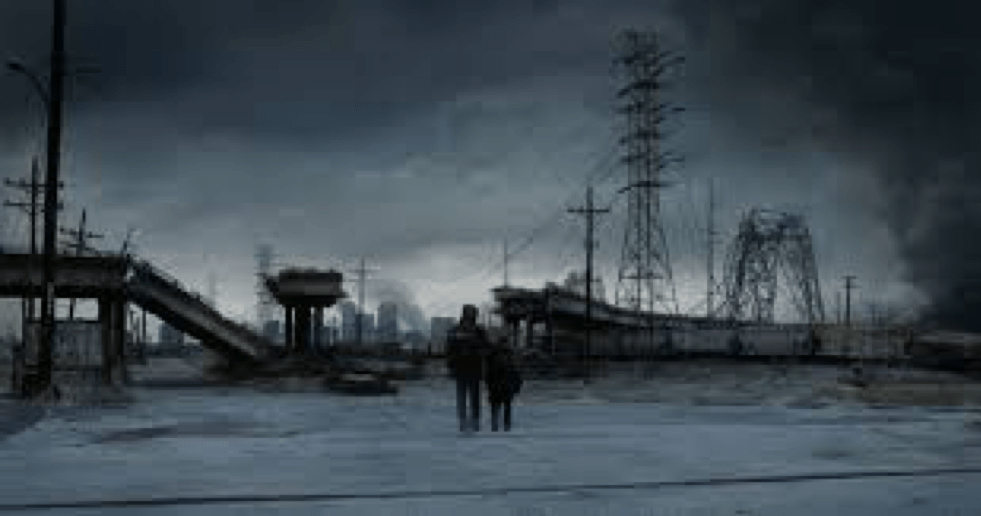
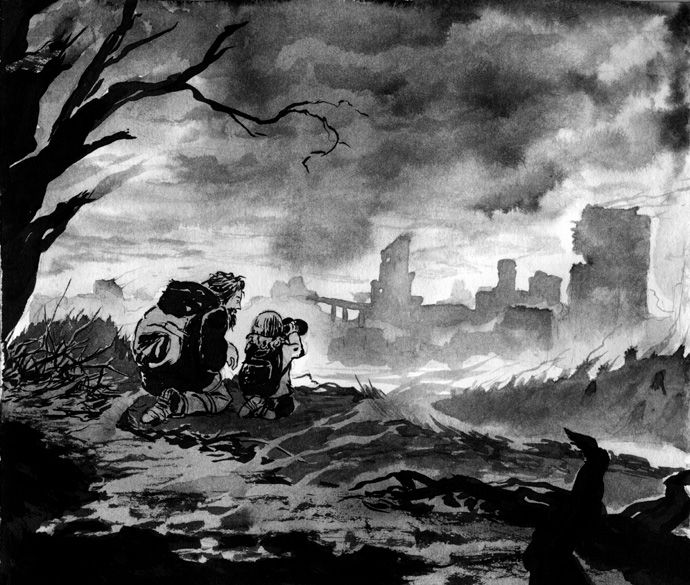
The Road by Cormac Mccarthy utilizes many features characteristic of postmodern literature. In the novel, it is difficult to distinguish between reality and a dream state which can be seen as a way to almost invert the typical narrative of a journey such as this one.

McCarthy utilizes fragmentation when splitting the novel between dreams and waking reality- this is a characteristic of postmodern texts. It is through this approach that suspicions can be raised as to the reliability of the narrative and what remains as the truth.

He uses prose, which can be seen as a postmodern choice to make in telling this narrative. He also describes paradoxical values systems-specifically the differences in values between the son and the man.

It is through the use of continued symbolism that lends this text towards postmodernism, as it leaves room for multiple different interpretations; epitomizing the postmodern concept of there being many different truths depending on the person analyzing.

It is in The Road that postmodernism is used to question good and bad, seemingly easy concepts, as it analyzes the essence of supposedly inherent truths in a world that has been somewhat wiped clean. It is through this inversion in narrative and symbolism that one can gather many meanings of the book but one of the most common interpretations seems to be the contrast between hope and fear. It is this concept that is established by the postmodern factors of inversion, symbolism, and fragmentation.

Postmodernism: Charles Jencks and his Garden of Cosmic Speculation

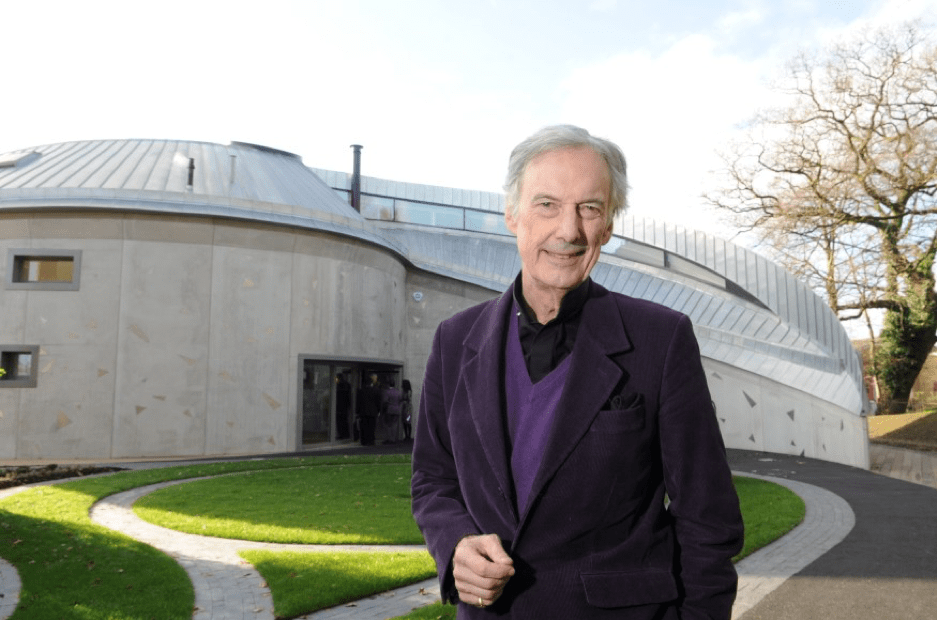
Charles Jencks was an architect/landscape architect and cultural theorist. He has written many books on modernism and postmodernism in architecture and landscape. He determined that postmodern architecture had to be anti-deterministic and multivalence in its approach. He theorizes that postmodern architecture was defined by the experience it would bring audiences. He believes in order for architecture to be postmodern it would need to be so complex that the number of meanings behind the structures are endless.

He pulled inspiration from Japanese gardening in creating his Gardens of Cosmic Speculation. (Pastiche- a characteristic in postmodernism)

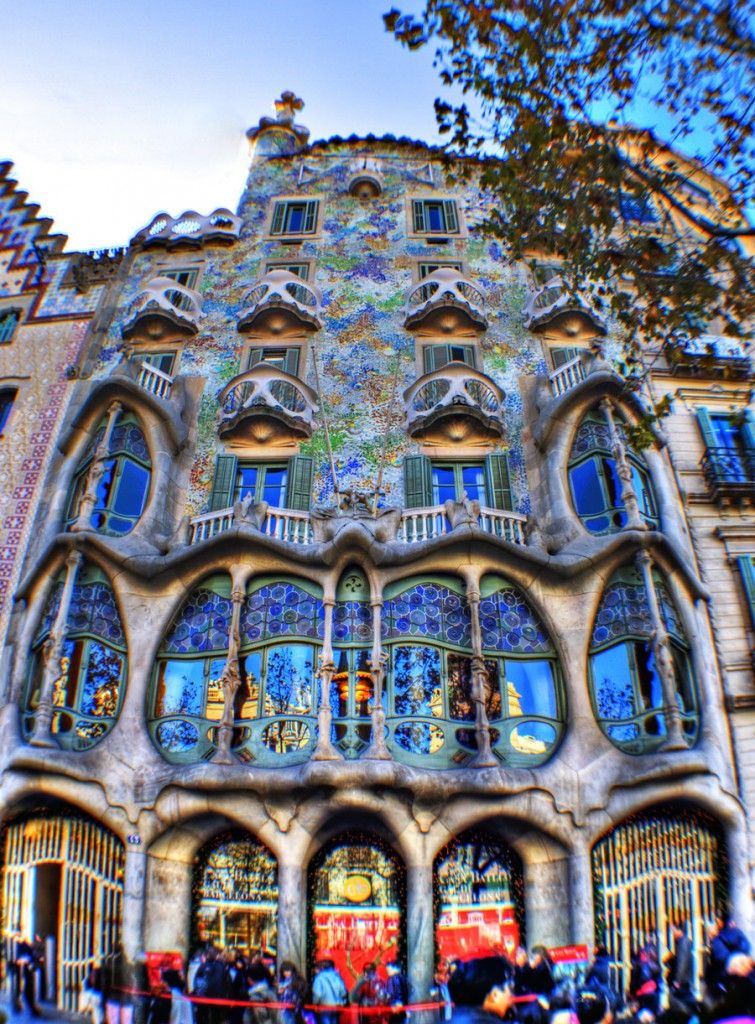
He also pulled inspiration from one of my personal favorites, Antoni Gaudi. He saw a pluralism in language through Gaudi’s work and believes this was the correct direction to move in. The facade of the building is embellished with metaphors of marine life, skeletons, etc. The building can also be seen as a dragon of sorts, supposedly representing Spain and being slain by a Patron Saint.

It was through postmodern architecture, he believed, that inexpressible truths could be, and should be, expressed. It is through the playfulness, pastiche, and pluralism used in Jencks’s architecture that seems to lend itself to an interpretation that there are endless interpretations in which it all depends on the human experience of it all.

Postmodernism:Banksy

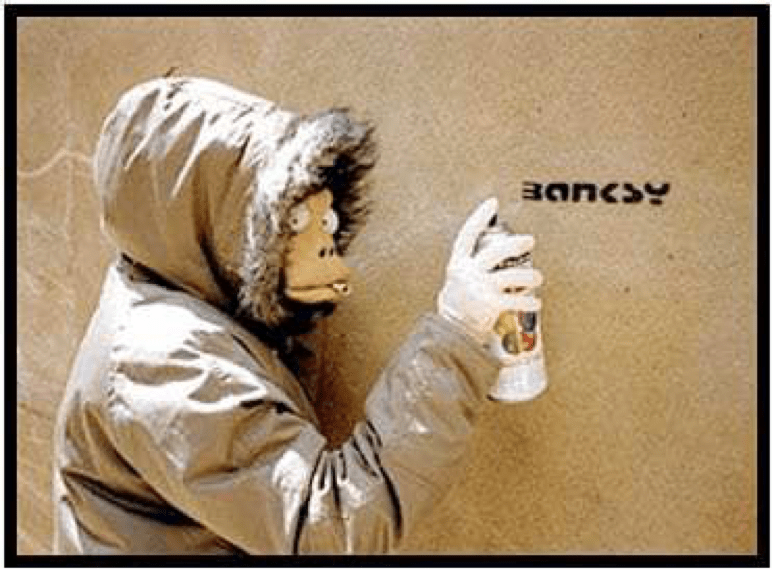
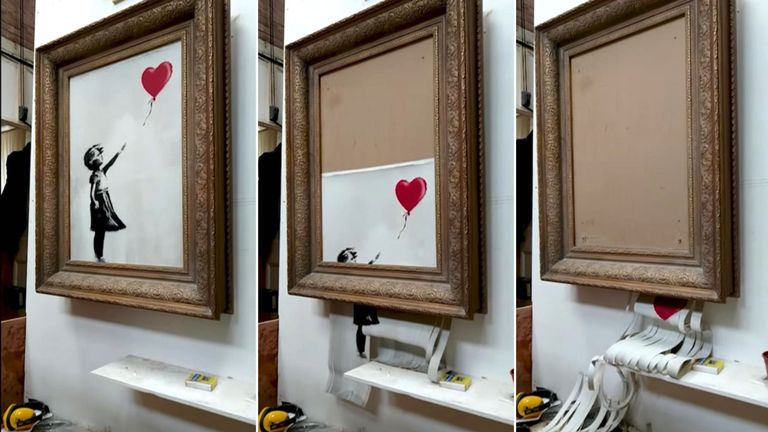
Banksy is an artist that is hard not to be intrigued by. He shreds his art pieces mid-auction, he anonymously releases an entire film, and continues on making power moves in the face of publicists, celebrities and high ranking auction officials.

Banksy’s Girl with Balloon sold in London auction for about 1.1 million dollars and mysteriously started to shred itself. However, people expect this to only increase the value of the piece.

Banksy typically works in graffiti as he wants his art to be available to everyone. It is also ironic as his art typically makes a statement on sociocultural issues and he is using graffiti to convey the message (which as we know vandalism is illegal). So in this way it is ironic to choose an illegal method to convey a message on things sometimes concerning legality.

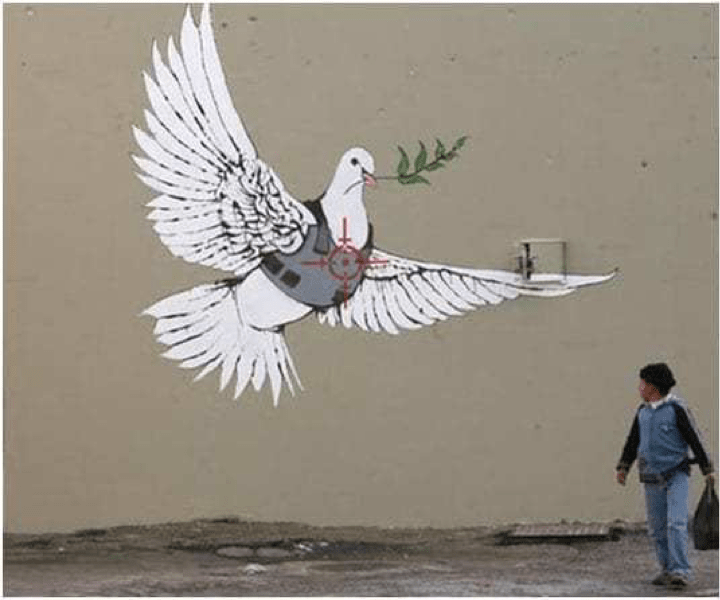
Armored Dove of Peace:

This piece is featured on the concrete part of the West Bank Wall (used to separate Palestine and Israeli). Through this piece’s contrasting and ironic symbolism, it is able to represent how peace can only be maintained and achieved if people want it; and in this case he believes people don’t.

It’s through Banksy’s continued use of graffiti (and its irony in the way that it conveys messages) and his focus on sociocultural issues that places him at the helm of postmodernist art.

Postmodernism: “Sincerity is Scary” by The 1975

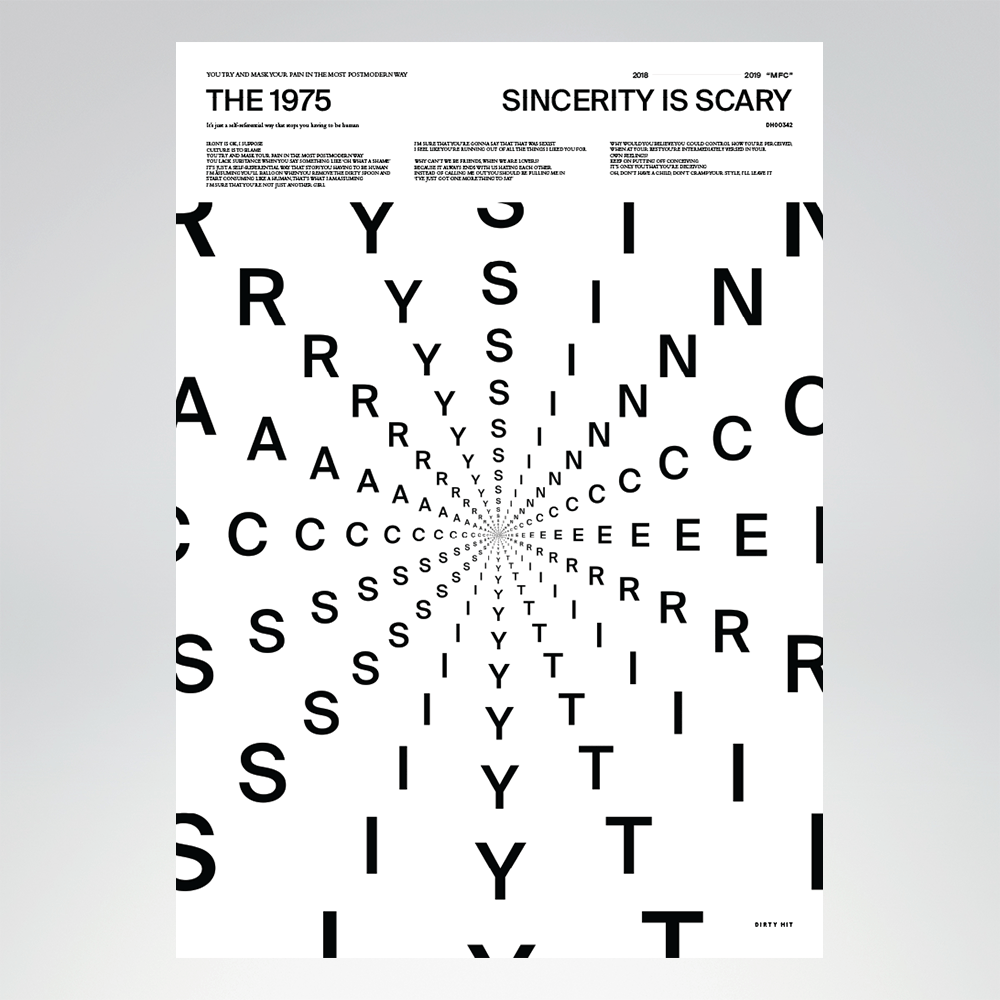
The 1975 released “Sincerity is Scary” as their third single off the album ‘A Brief Inquiry Into Online Relationships’ in September of last year. It was then only two months later when they released the music video accompanying it. It is through the critical lyrics and contrasting upbeat dance performances done in the video that help in creating an overall feel of postmodernism.

It in and of itself is a paradox as the lyrics denounce postmodernism in our culture today while the pastiche and self reference within the video seems to contribute to it (which in fact makes it even more postmodern).

Some examples of postmodernism in the video include:

-The clock at the beginning of the video reading 1975- the band name

-It is filled with comedic tropes-i.e. a piano falling, the soccer ball going through the window

-The little girl at the end of the video in black and white is a reference to another music video “A Change of Heart”

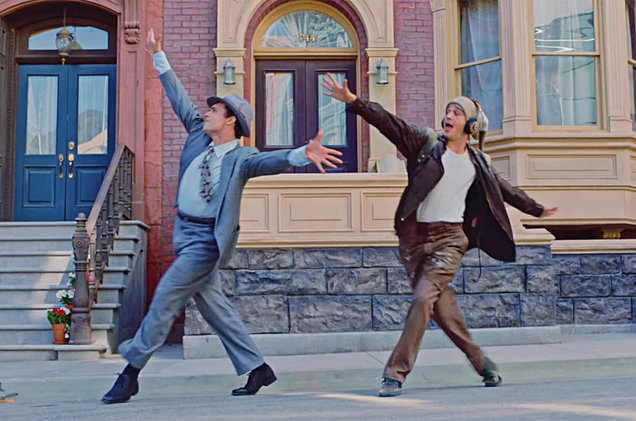
These are only a few of the many Easter eggs littered throughout this video; including more self references such as having the sign above the door at the beginning read 1975, the cinema sign being featured in another one of their videos, and some of the same choreography from the “A Change of Heart” video. They also have Singing in the Rain inspired choreography when lead singer, Matty, twirls around the lamppost.

This dance sequence is also inspired by the alley dance in My Sister Eileen.

It is because of the multiple uses of self reference, pastiche, maximalism and intertextuality that we see postmodernist flare to it. It is through this framework that we are able to gage the true irony between the lyrics and the music video itself. When looking solely at the lyrics you are able to see the frustration towards todays postmodern culture and I believe it is through the excessive postmodernism of the video that we are able to see this conflict more clearly; as it creates even more of a contrasting paradoxical effect. I also believe that it is this paradoxical effect that reveals that although postmodernist culture can bring about great things such as choice of your own narrative, it can also make things more complicated as it gives everyone the right to feel offended all the time-as there is not simply one truth anymore. It is through the contrast of the song lyrics and video that epitomizes this conflict in today’s culture.

Design a site like this with WordPress.com
Get started