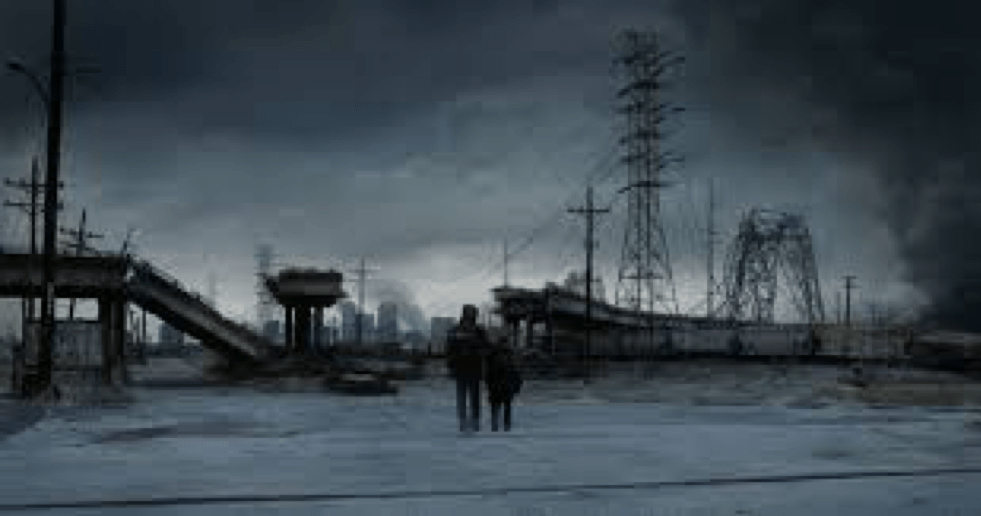
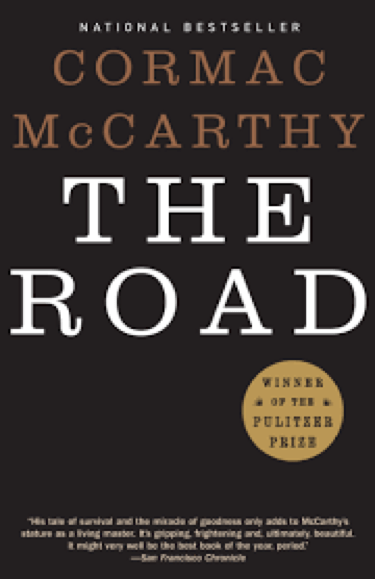
The Road by Cormac Mccarthy utilizes many features characteristic of postmodern literature. In the novel, it is difficult to distinguish between reality and a dream state which can be seen as a way to almost invert the typical narrative of a journey such as this one.
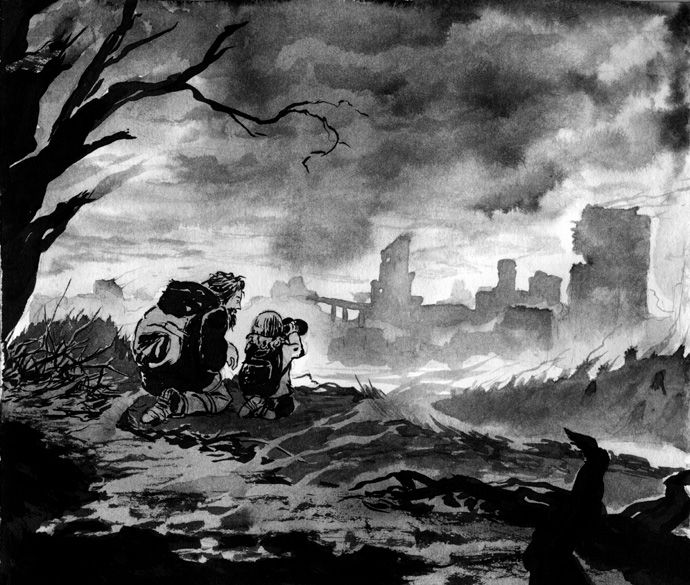
McCarthy utilizes fragmentation when splitting the novel between dreams and waking reality- this is a characteristic of postmodern texts. It is through this approach that suspicions can be raised as to the reliability of the narrative and what remains as the truth.
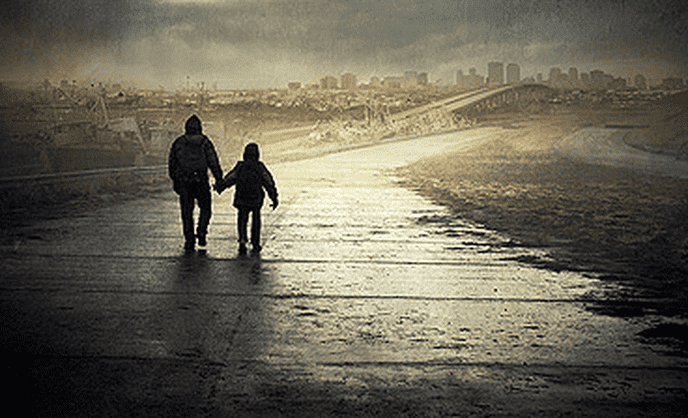
He uses prose, which can be seen as a postmodern choice to make in telling this narrative. He also describes paradoxical values systems-specifically the differences in values between the son and the man.
It is through the use of continued symbolism that lends this text towards postmodernism, as it leaves room for multiple different interpretations; epitomizing the postmodern concept of there being many different truths depending on the person analyzing.
It is in The Road that postmodernism is used to question good and bad, seemingly easy concepts, as it analyzes the essence of supposedly inherent truths in a world that has been somewhat wiped clean. It is through this inversion in narrative and symbolism that one can gather many meanings of the book but one of the most common interpretations seems to be the contrast between hope and fear. It is this concept that is established by the postmodern factors of inversion, symbolism, and fragmentation.
 Postmodern with a captital P